
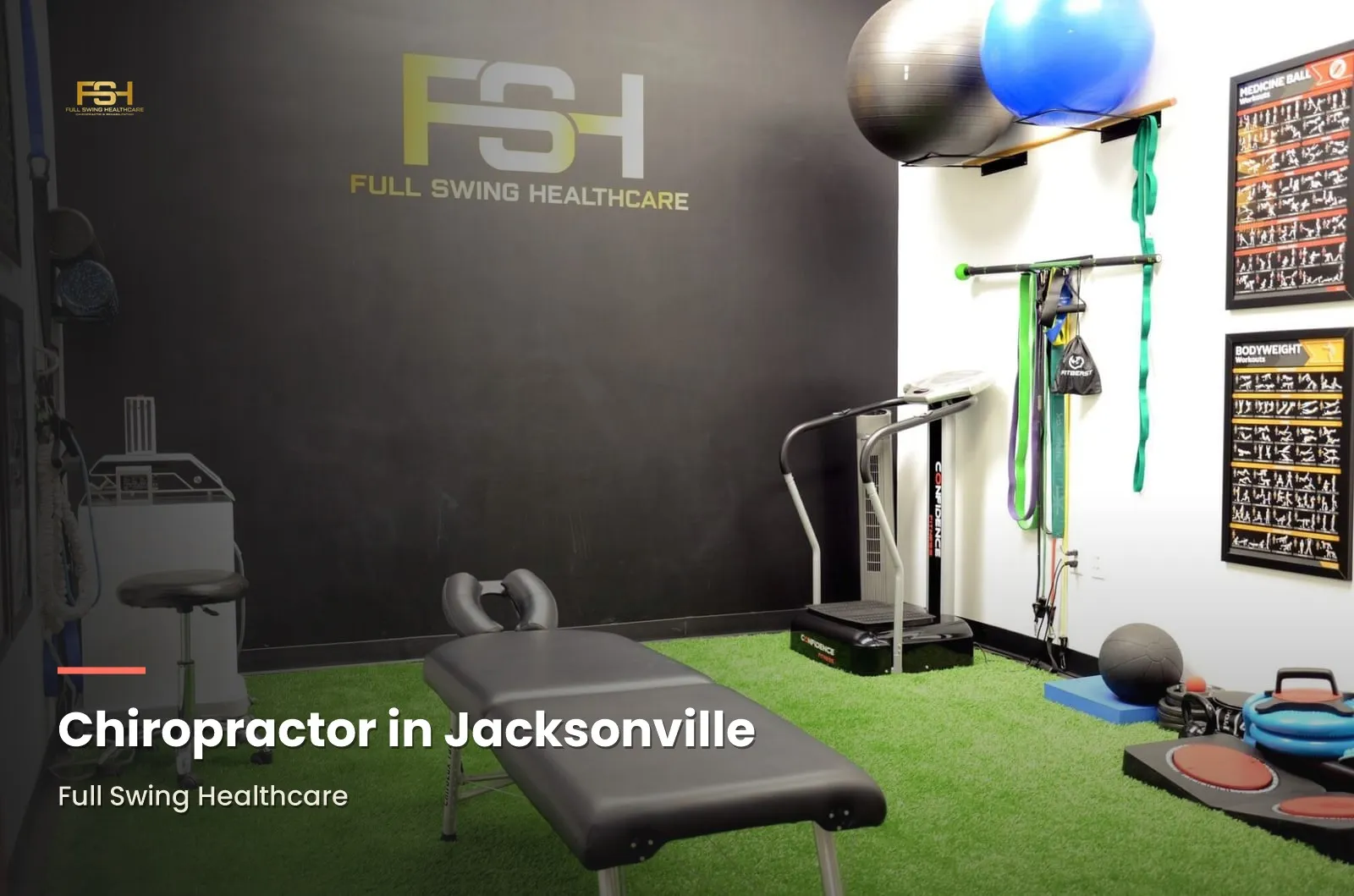
The right chiropractor in Jacksonville works out what is wrong before treating anything. At Full Swing Healthcare that means a full exam on your first visit, a plain English explanation of what we found, and a plan drawn from thirteen treatments under one roof instead of a single tool. We have worked this way since 2017.
What a chiropractor is trained to do
A chiropractor is a Doctor of Chiropractic, licensed by the state to diagnose and treat problems of the spine, the joints, the muscles and the nerves around them. Florida gives you direct access to chiropractic care, so you can book with us without a referral from another doctor, and both of our doctors hold current Florida chiropractic licenses.
The adjustment is the part most people picture, but it is only half the job. The other half is diagnosis: working out whether your pain comes from a stiff joint, an irritated nerve, an overloaded muscle or tendon, or something that does not belong in a chiropractic office at all. The treatment follows from that answer, not the other way around.
Sometimes the answer is an adjustment, and the Palmer Package of techniques we adjust with is laid out below. Just as often it is soft tissue work, needling, shockwave or rehab exercise, and now and then it is a referral out for imaging because the exam says one is medically necessary.
“We had an awesome experience at Full Swing. The staff was welcoming, professional, and made me feel comfortable the moment I walked in. Dr. Cody took the time to really listen to my concerns and explained everything clearly. The adjustments were gentle yet effective, and I never felt rushed during appointments. The office is clean, organized, and runs on time. Scheduling is super easy. If you are looking for a chiropractor who truly cares about your health and well-being, I highly recommend them. I am so grateful to have found this place.”
LT Lauren Thompson
Google review
What a chiropractic adjustment actually does
A good chiropractic adjustment in Jacksonville isn’t a five-minute crack-and-go. At Full Swing Healthcare, we figure out what’s actually going on first with a real exam, then choose the technique that fits your body and your problem. That’s how you get relief that lasts, not just a quick pop that feels nice for an afternoon.
When a joint in your spine or pelvis stops moving the way it should, the muscles around it tighten, nearby nerves get irritated, and your body starts compensating in ways that create pain somewhere else entirely. An adjustment is a precise, controlled movement that restores motion to that stuck joint. Done well, it takes pressure off the nerve, lets the surrounding muscles relax, and gives your body permission to move freely again.
The joints being treated in your spine are the facet joints, the pair of small hinges at the back of every spinal level that guide how far and in which direction that segment moves. They carry a dense supply of pain sensitive nerve endings, which is why a single stiff facet can produce pain that feels far bigger than one small joint should be able to cause. The clinical name for the whole family of treatment is spinal manipulative therapy, and the audible release you may hear is cavitation, gas coming out of solution inside the joint fluid. That sound is a by-product. It is not the goal, and it is not a measure of whether the treatment worked.
The key word is precise. We’re not cracking everything in sight and hoping something helps. Dr. Cody Muren and Dr. Eric Hall adjust the specific joint your exam points to, and nothing it doesn’t need.
“As a retired medical practitioner, I have found his techniques and knowledge outstanding. Palmer graduates are the best.”
CR Catherine Roberts
Jacksonville
The Palmer Package, which is what we adjust with
Dr. Muren trained at Palmer College of Chiropractic, the profession’s founding school, and adjusts using what Palmer graduates call the Palmer Package. It is not one technique. It is the group of adjusting systems Palmer teaches together, so that the technique can be matched to the patient rather than the patient matched to the only technique in the building.
- Diversified (manual, hands-on): the classic, precise hands-on technique for restoring joint motion, the “twist and pop” most people picture
- Gonstead: the most exacting of the group. Its whole discipline is finding the one specific segment at fault, through static and motion palpation and posture analysis, and adjusting that level alone with a contact and an angle chosen for it
- Thompson drop-table: a segmented table that drops a fraction of an inch to move a joint with far less force, ideal for sensitive areas and older patients
- Activator (instrument-assisted): a gentle, controlled spring-loaded tool for a low-force adjustment when a manual technique isn’t right for you
- Toggle recoil: a fast, very light, extremely shallow contact developed for the upper neck, where precision matters more than force
- Pelvic and extremity work: because your hips, shoulders, and feet matter as much as your spine
People are built differently, and so are their problems. A college athlete with a locked-up lower back needs something different than a grandparent with arthritic joints or an expecting mom in her third trimester. Carrying the full package is what makes that possible.
The upper cervical spine, the top two segments where the skull meets the neck, gets adjusted here both by hand and with the Activator, depending on what the exam finds and what you are comfortable with. We do not practise it as a separate branded discipline like NUCCA or Blair, and we would tell you plainly if you wanted one of those systems specifically.
If a traditional twist and pop isn’t your thing, tell us. We have gentle, low-force options that work just as well, and nothing happens until you’re comfortable with the plan.
One technique we do not offer is the strap-and-pull method you have probably seen go viral online. Our Y-strap adjustment page lays out the honest reasoning, and what we reach for instead.
What actually separates one adjusting technique from another
Technique names get thrown around online with no explanation, so here is the plain version. They differ in three things only: how fast the input is delivered, how much load comes with it, and how tightly it is aimed.
- High velocity, low amplitude (HVLA): the quick, shallow thrust behind a manual adjustment, used by Diversified and Gonstead alike. Speed is what does the work, not force, which is why a well aimed adjustment feels like a release rather than a shove.
- Low force and instrument methods: a segmented drop table or a spring loaded instrument delivers a similar input with a fraction of the load. This is the route when bone density, age, acute pain, or plain nervousness rules out a manual thrust.
- Specificity: how narrowly the contact is aimed. A general contact moves a region, while a Gonstead style contact is chosen for one segment after palpation says that segment is the problem.
Age changes the answer too. We see patients across a wide age range, children included when a parent is with them, and the technique scales accordingly: what suits a college athlete is not what suits a seven year old or an eighty year old, and low force options exist for exactly that reason. Our chiropractic care for kids and families answer covers how that works.
What decides which one you get is the exam, not a house style. Segment by segment motion testing, orthopedic tests, your history and your comfort level narrow it down before anything is delivered. A technique that is perfect for a 28 year old with a locked lumbar facet is the wrong answer for someone with thinning bone or a joint that is already moving too much.
When it makes sense to see a chiropractor
Most people find us because something hurts and will not settle on its own. These are the problems we see most, and most of them have their own page if you want the detail.
- Back pain that keeps coming back, or that started with a lift, a twist or a long drive
- Neck pain and stiffness, from desk work and long commutes to old injuries
- Sciatica, or pain, tingling and numbness running down a leg
- Headaches that start in the neck and upper back
- A herniated disc or a bulging disc pressing on a nerve
- Shoulder pain that limits reaching, lifting or sleep
- Whiplash and neck strain after a car accident
- Sports injuries and overuse strains in surfers, runners, golfers and lifters, and heel pain from plantar fasciitis
When a spinal adjustment is not the right call
Not every spine should be adjusted, and an honest clinic says so out loud. The findings that count as contraindications, meaning they stop an adjustment before it starts, include acute fracture or suspected fracture, significant osteoporosis, joint instability, bone infection or a suspected tumour, an active inflammatory arthritis flare in the spine, recent spinal surgery with hardware, and any sign of cauda equina syndrome, meaning saddle numbness or new loss of bladder or bowel control. Those last ones, like a suspected fracture after a fall or a crash or the sudden worst headache of your life, are a same day emergency, not a chiropractic case.
That is the real reason the exam comes first. Most of these are ruled out in minutes, some send you for imaging before anyone touches you, and a few mean the right care is somewhere other than this office. Being told no is a service too.
How to choose a chiropractor in Jacksonville
Jacksonville has no shortage of chiropractic offices, and they do not all work the same way. These are the questions worth asking any clinic before you book, ours included.
Will they examine you before they treat you?
A first visit should start with a conversation and a hands-on exam: range of motion, posture, strength, reflexes and the specific joints and muscles involved. We never adjust on a first visit without that exam, and most people still get their first treatment the same day.
Do they have more than one way to treat you?
A clinic with one technique gives every patient that technique. We adjust with the full group of systems taught at Palmer College of Chiropractic, low force options included, and keep acupuncture, dry needling, shockwave, cupping, scraping and massage in the same building.
Will they tell you how many visits, and why?
After the exam you should hear an honest estimate, not an open-ended package you cannot get out of. We re-check as you go and change the plan when your body is not responding the way we expected.
Do they X-ray everyone?
Routine spinal films are not recommended for most back and neck pain, so we do not take X-rays here. When the exam says an image is medically necessary, we refer you out for it and work from the report. Bring any X-rays or MRI results you already have to your first visit and we will go through them with you. Our chiropractic X-rays page explains which findings call for one.
Do they take your insurance?
We accept Florida Blue, United Healthcare, Humana, Cigna, Florida Medicaid and VA benefits, and we check your coverage before your first visit. The details for each carrier are on our page about the insurance we accept.
Are the prices clear before you start?
They should be. Here the first visit is $115 with the full exam included, follow-up adjustments are $50, adding an adjustment to any treatment is $30, and we accept all major credit and debit cards and cash. Our pricing and payment options page has the rest.
$115 first visit, exam included
$50 follow-up adjustments
+$30 add an adjustment to any treatment
“My wife and I have gone to a chiropractor for 35 years, twice a month. Dr. Cody Muren is very professional. We are very satisfied with his chiropractic adjustments and he goes above and beyond with advice.”
PO Patrick Olivier
Google review

Who you will see here
Two chiropractors see patients at Full Swing Healthcare. Dr. Cody Muren founded the clinic in 2017. He is a graduate of Palmer College of Chiropractic, the founding school of the profession, holds Florida license CH12412, and is the current treating chiropractor for the Jacksonville Jumbo Shrimp. He is also a certified Chiropractic Acupuncturist, which is why acupuncture and chiropractic can happen in the same visit here.
Dr. Eric Hall earned his Kinesiology degree at Jacksonville University and is a former football and baseball athlete. Patients know him for a gentle, attentive, hands-on style, and he cares for families, athletes, and expecting and new moms alike.
You can read more about both of them on our Meet Our Doctors page.
Your chiropractic and spinal adjustment clinic in Jacksonville and Jacksonville Beach
Full Swing Healthcare is at 13770 Beach Blvd #4, Jacksonville, FL 32224, and patients come to us from all over Jacksonville and the surrounding areas: Southside, Baymeadows, Deerwood and San Marco, and out to Jacksonville Beach, Neptune Beach, Atlantic Beach and Ponte Vedra Beach. Same-day appointments are often available, and because we keep chiropractic, soft-tissue work and rehab under one roof, you can handle a combined visit in a single trip instead of driving all over town. We are open Monday, Wednesday and Thursday from 9am to 7pm and Tuesday and Friday from 9am to 1pm.
Coming from the coast? Our Neptune Beach chiropractor, Atlantic Beach chiropractor and Ponte Vedra Beach chiropractor pages cover the drive and the care each community asks us for most.
From your first call to your first treatment
Book or call
Book online through our ChiroTouch patient portal or call (904) 539-3352. You can fill in your health history online before you arrive to save time.
Talk it through
One of our doctors sits down with you to go over what hurts, when it started, and what makes it better or worse. Nothing happens until you understand the plan.
Get examined
We test range of motion, posture, strength, reflexes and the joints and muscles involved, which is how we tell a pinched nerve from a tight muscle.
Leave with a plan
We explain what we found in plain English, and in most cases your first treatment happens the same day. Plan on 45 to 60 minutes in total.
“This was my first time ever going to a chiropractor, and Dr. Muren made the experience amazing. He walked me through everything and made me feel comfortable.”
DL Devin Lombard
Jacksonville
More than an adjustment
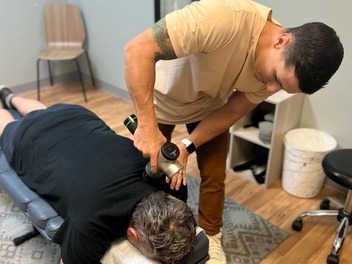
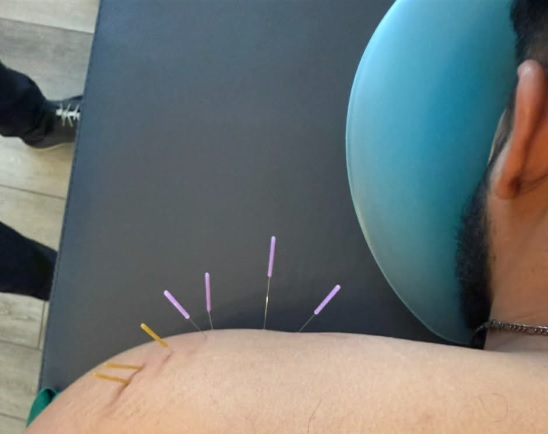
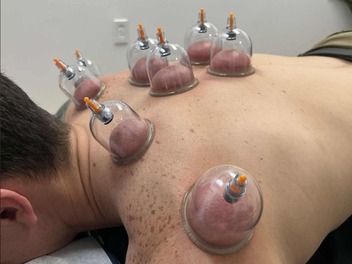
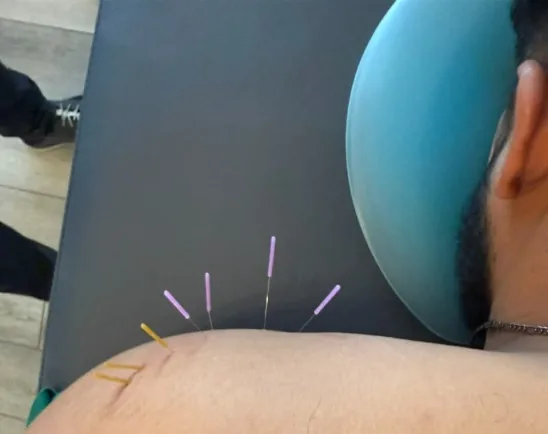
Joints rarely go wrong on their own. The muscle guarding a stiff joint, a tendon that has been overloaded for months and fascia that has tightened around an old injury will all pull the problem back if they are left alone. That is why a plan here often pairs chiropractic care with therapeutic massage, dry needling, cupping or shockwave therapy in the same visit, so the adjustment holds longer and you get back in full swing faster. The full list is on our treatments and services page.
Pair it with


Common questions
Is a chiropractor a real doctor?
Yes. A chiropractor holds a Doctor of Chiropractic degree and has to be licensed by the state to practise. In Florida that license comes from the Florida Board of Chiropractic Medicine, and Dr. Muren’s license number is CH12412.
Is a chiropractic adjustment safe?
Yes. For the vast majority of people, adjustments are safe and gentle. We start every relationship with a full exam precisely so we know your body is a good fit, and if a forceful technique isn’t right for you, we use a low-force or instrument-assisted method instead.
Does getting adjusted hurt?
It shouldn’t. Most people feel a quick release of pressure and a sense of relief, not pain. You might feel a little tender afterward the way you would after a good workout, but that usually fades within a day.
Do chiropractors only treat backs?
No. The spine is a big part of the work, but we also treat necks, headaches that start in the neck, shoulders, hips, knees and feet, because pelvic and extremity joints matter as much as the spine. Plenty of knee and heel problems trace back to how the hip or the ankle is moving.
Can I see a chiropractor after a car accident or a work injury?
Yes. After a crash in Florida you need to be seen within 14 days for your PIP benefits to apply, and we bill PIP directly; our auto accident chiropractor page covers the steps. Injuries on the job go through workers’ compensation, which we also accept, and our work injury chiropractor page explains how that works.