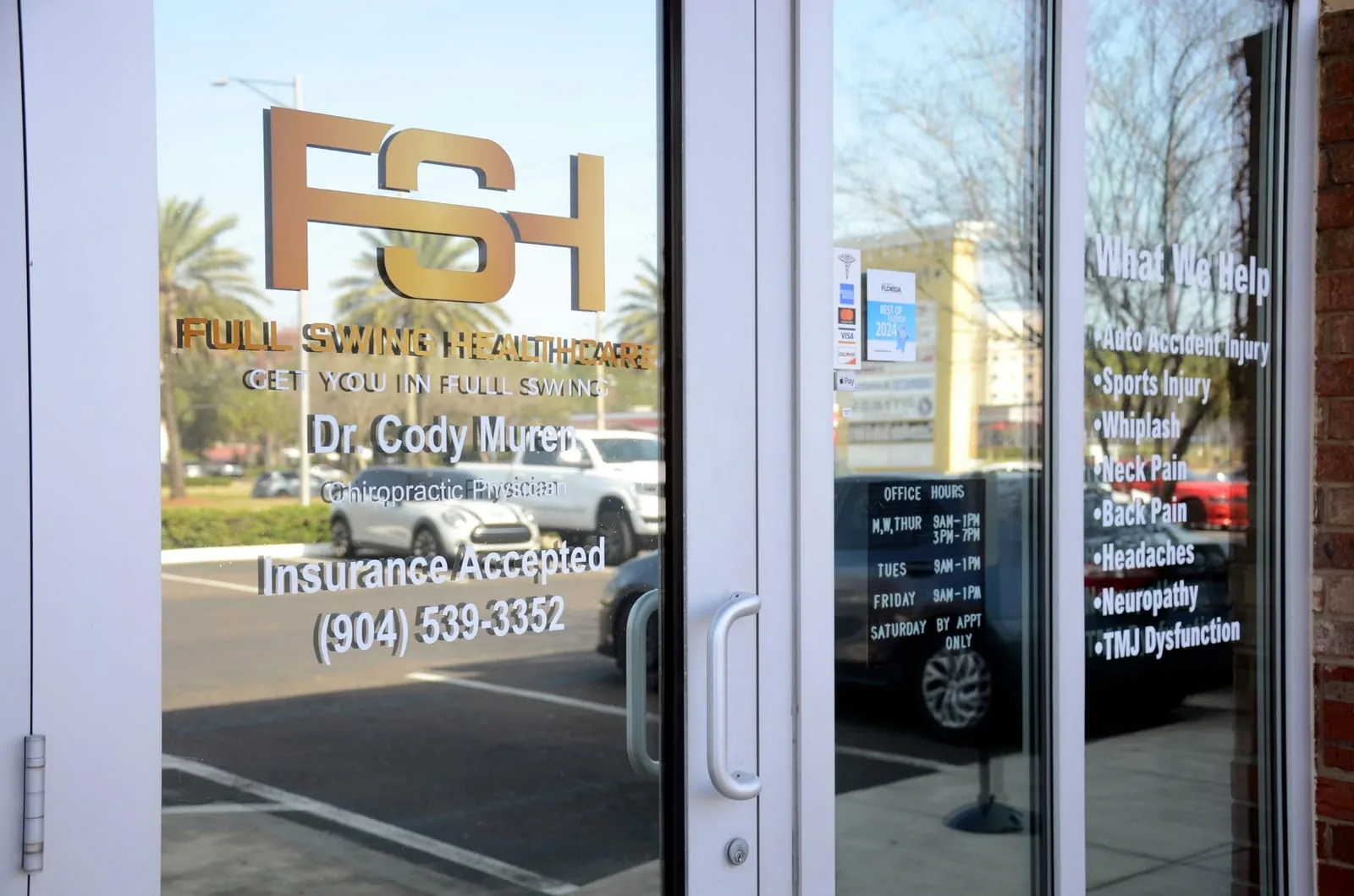
Family Chiropractic Care in Jacksonville, FL
Dr. Muren and Dr. Hall see patients from infancy through retirement at Full Swing Healthcare, with technique, clinical thinking, and treatment goals adjusted completely for each life stage.
Family Chiropractic Care in Jacksonville, FL
Dr. Muren and Dr. Hall treat patients from infancy through retirement. Technique, clinical goals, and the definition of a good outcome are adjusted completely for each life stage. Pediatric adjustments, adolescent sports injuries, adult spinal care, and senior mobility work all happen under one roof on Beach Blvd.
Most Practices Call Themselves Family Chiropractic. Here’s What It Means at Full Swing.
A lot of chiropractic clinics call themselves family practices because they'll technically see anyone who walks in. That's not what family chiropractic means at Full Swing. It means Dr. Muren and Dr. Hall modify not just their technique but their entire clinical framework, the assessment, the goals, the conversation with the patient, and the definition of a good outcome, based on who is in front of them.
A pediatric spine is not a small adult spine. The ossification centers of a child's vertebrae are still developing. The biomechanical loading tolerance is different. The clinical presentations are different, they're not coming in with degenerative disc disease, they're coming in with apophyseal ring fractures from growth spurts and heavy training, Scheuermann's kyphosis from growth and poor sitting posture, and the accumulated stress of carrying a 20-pound backpack on a spine that's still building its structural capacity. A 72-year-old with spinal stenosis, osteoporotic bone density, and advanced facet arthrosis is not a 35-year-old with an acute disc injury. Adjusting them the same way would be wrong medicine. Treating them with the same treatment goals would produce disappointment. The whole framework changes.
Assessment First. Always. No Exceptions.
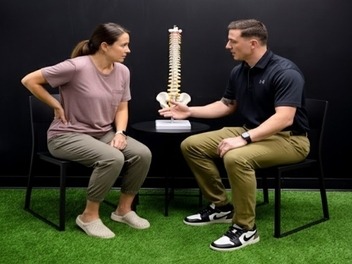
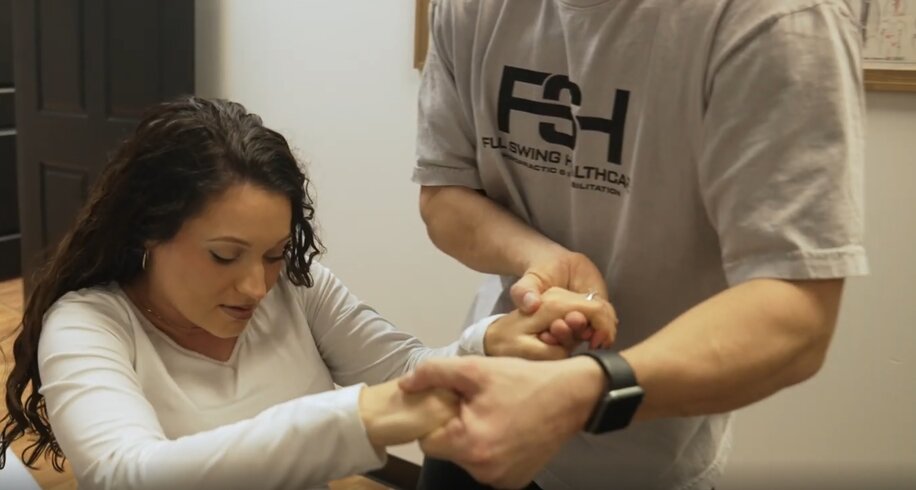
Nobody at Full Swing gets adjusted on their first visit without a full examination. This is not standard practice in chiropractic. There are clinics where you fill out a form, sit down, and get adjusted before anyone has done a range of motion measurement or an orthopedic test. That is not how Dr. Muren or Dr. Hall practice. Before any treatment begins, the patient receives a complete structural assessment: postural analysis, active and passive range of motion, orthopedic testing appropriate to the complaint, neurological screening, and palpation of the affected segments. For pediatric patients, the assessment is modified for developmental stage. For seniors, it's modified for bone density and fragility. But it always happens first.
After the assessment, the patient gets a clear explanation of what was found: which segments are restricted, what the likely contributing mechanical factors are, what the realistic outcome expectation is, and what the care plan looks like with a specific timeline. No vague open-ended treatment commitments. A defined course of care, a reassessment point, and an honest conversation about what we expect to happen. Jacksonville families drive from Ponte Vedra, Fleming Island, and St. Augustine to this office on Beach Blvd because that standard of care is genuinely different from what they've found elsewhere.
How We Treat Each Member of the Family
Infants and Young Children
Pediatric adjustments use finger-tip pressure or the low-force Activator instrument, the amount of pressure used on an infant is roughly equivalent to checking the ripeness of a tomato. Birth trauma, including cervical strain from vacuum or forceps delivery, creates restricted upper cervical segments that can contribute to nursing difficulties, torticollis, and unsettled behavior in newborns. Recurring ear infections, colic, and the postural asymmetries that develop in infants who spend long hours in car seats and bouncers are other common reasons parents bring young children in. The assessment and the treatment are gentle, brief, and structured around the child's tolerance.
School-Age Children and Adolescents
This is the age group where structural patterns are established that carry forward through life. Adolescent idiopathic scoliosis, lateral spinal curvature that typically develops during puberty, needs to be monitored and assessed, not ignored until the curve is severe. Scheuermann's kyphosis, the rounded upper thoracic posture driven by irregular vertebral ossification, develops in adolescents and creates the adult thoracic hump that chiropractic cannot reverse once the bone has matured. Catching both conditions during the growth years creates meaningful intervention windows that close with skeletal maturity. Jacksonville has a strong youth sports culture, football at Sandalwood and Atlantic Coast, competitive swimming, travel baseball, and tournament soccer. Repetitive loading injuries in adolescents, including Little Leaguer's shoulder (proximal humeral epiphysiolysis), Sever's disease at the calcaneal apophysis, and lumbar spondylolysis in hyperextension sports, need to be identified and treated differently than the same injuries in an adult because the growth plate is the vulnerable structure, not just the soft tissue.
Adults
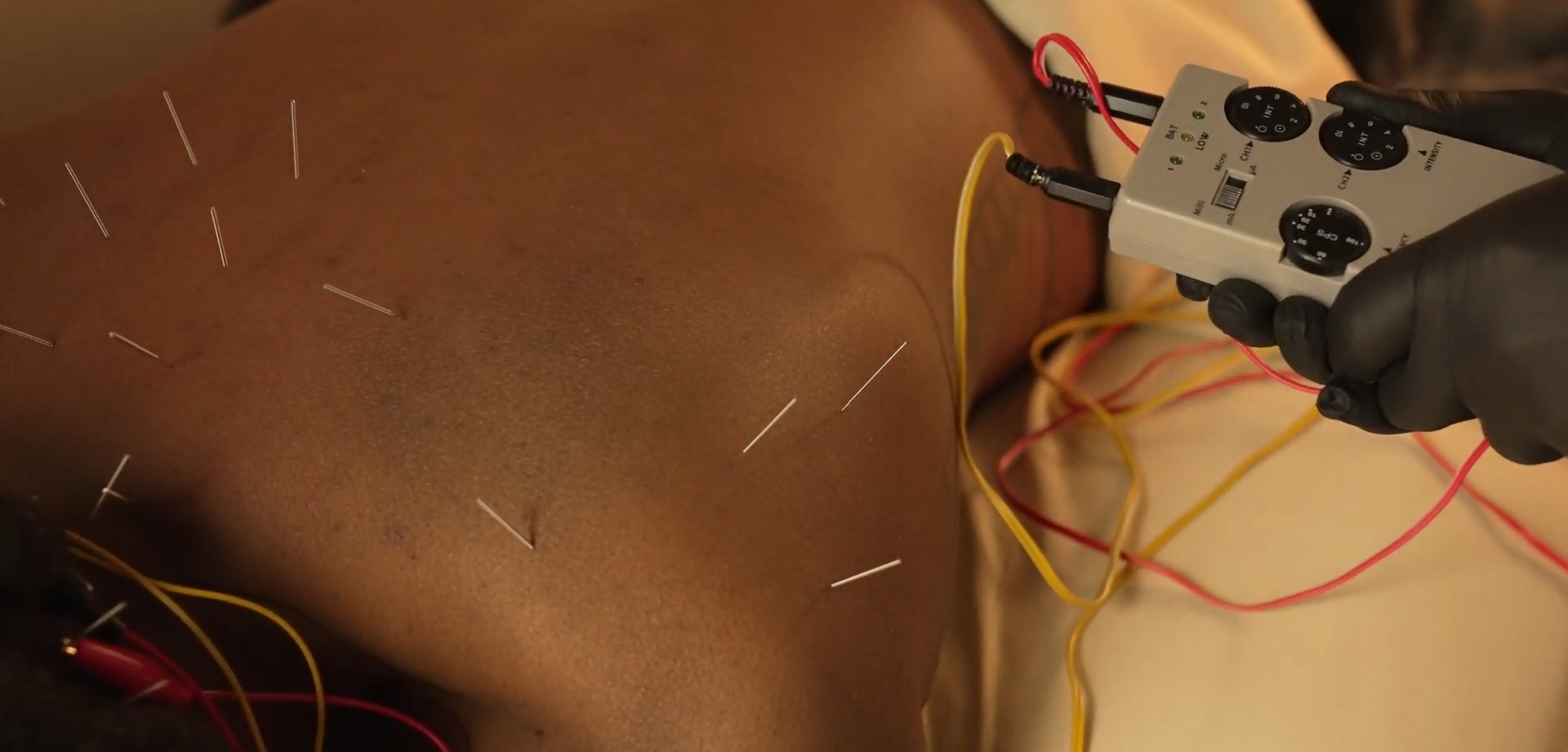
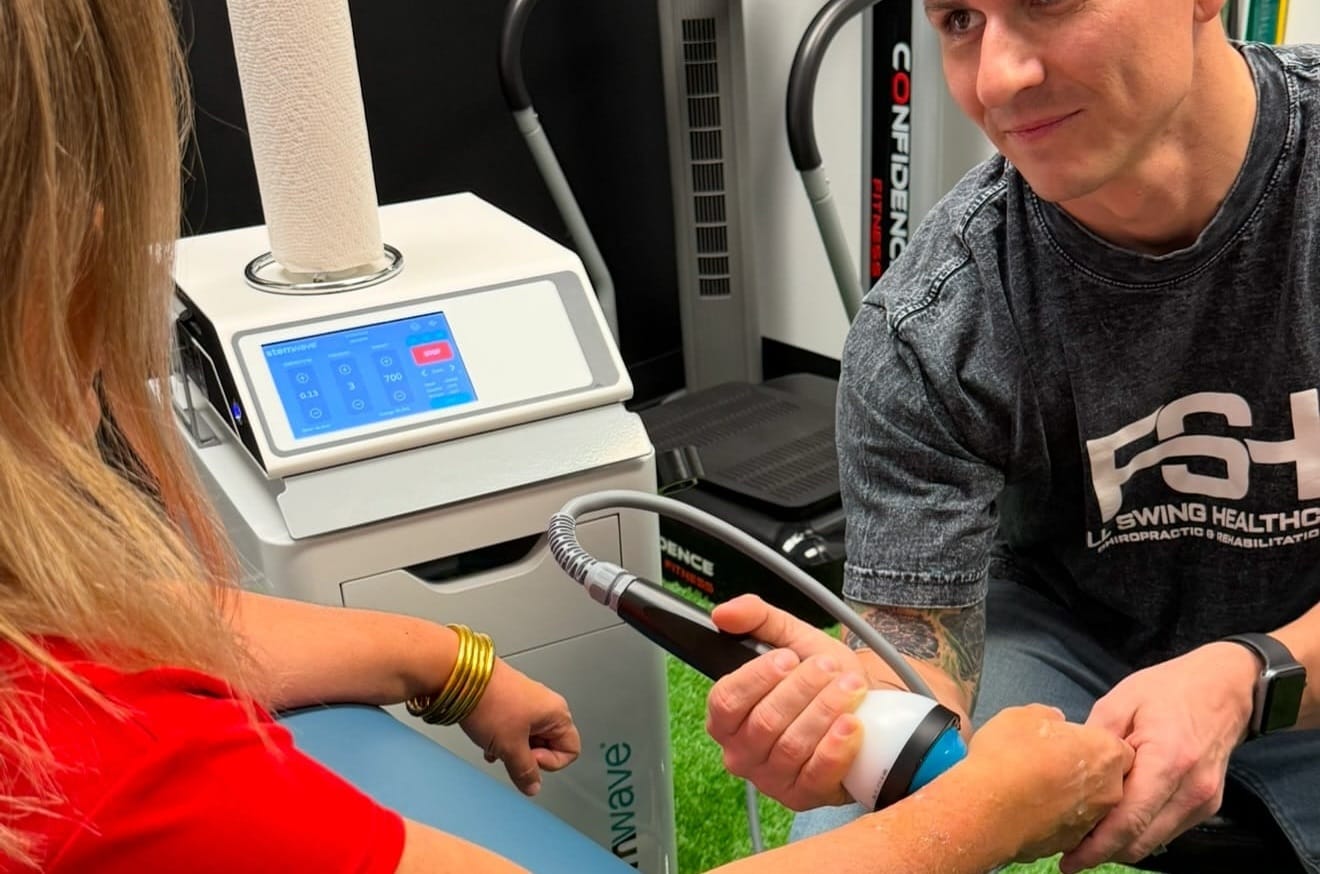
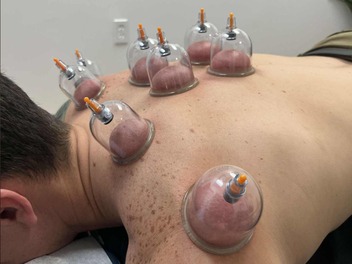
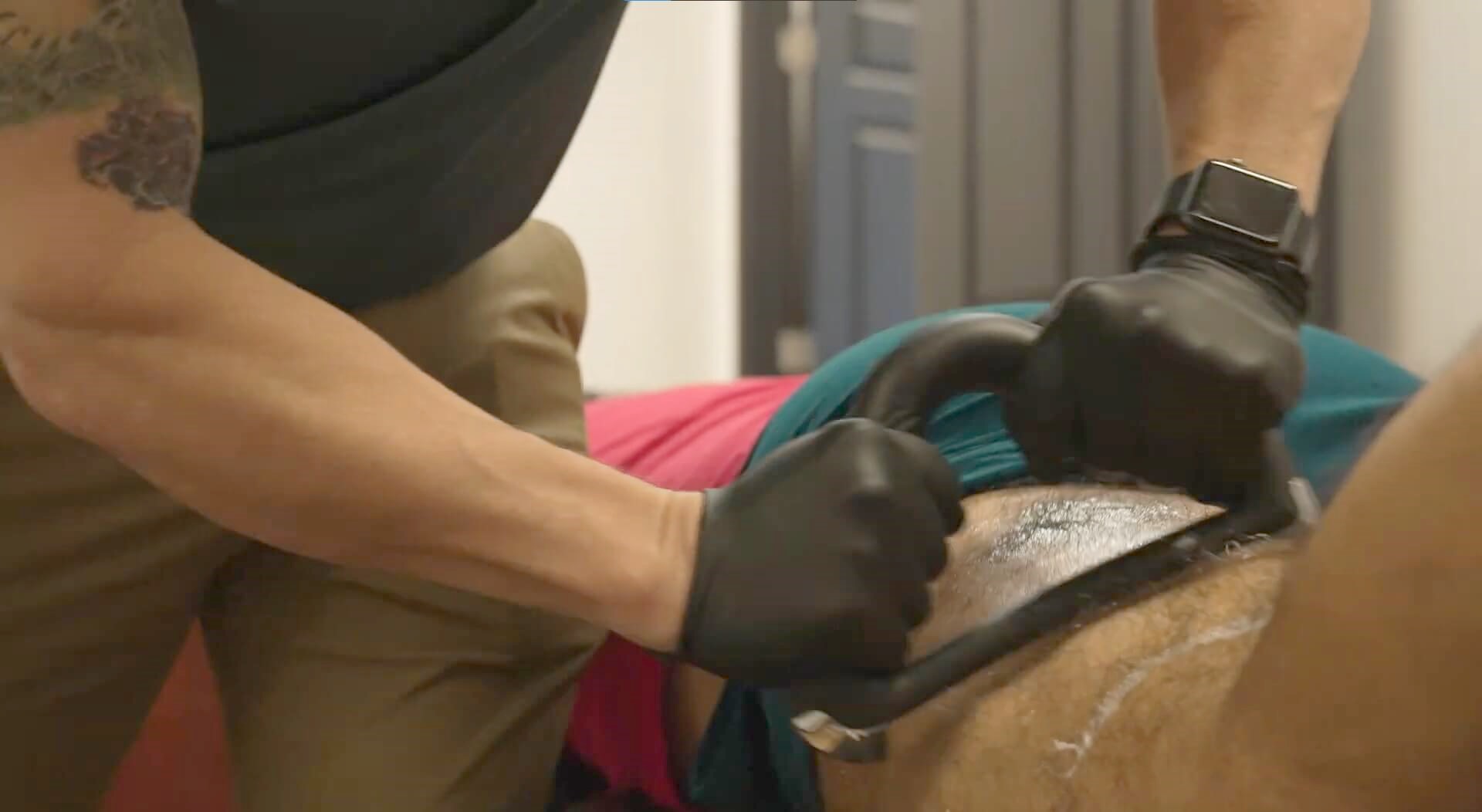
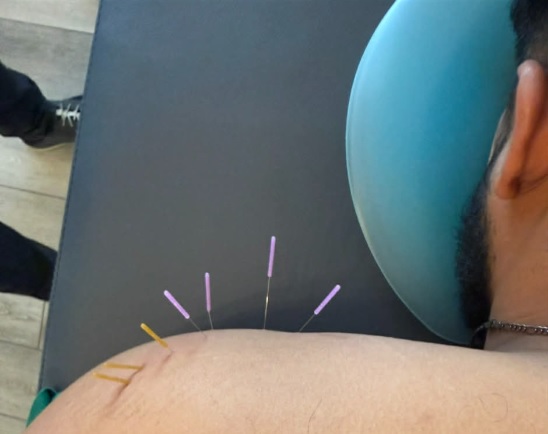
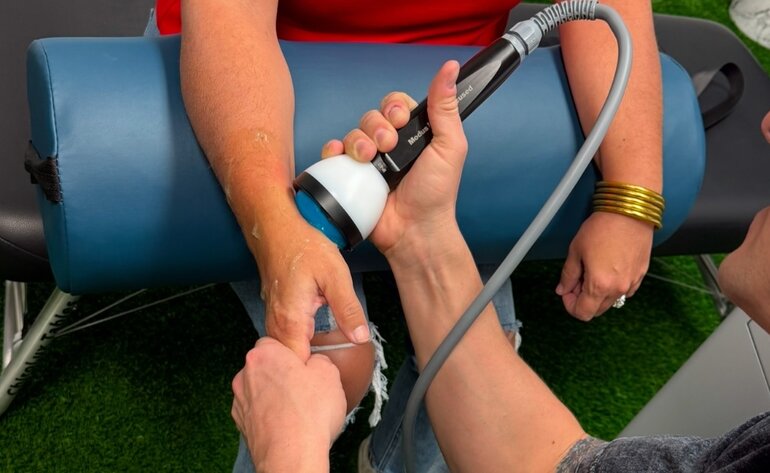
Adults in their 30s, 40s, and 50s make up the bulk of the practice. This is the population managing the accumulated mechanical damage of career loads, desk work, physical labor, athletic activity, and the postural deterioration that develops when people stop moving as much as they did at 25. The clinical presentations include lumbar disc herniations, cervical radiculopathy, SI joint dysfunction, facet arthrosis, and the myofascial restriction patterns that develop around all of these over time. Treatment combines chiropractic adjustments with soft tissue work, dry needling, IASTM, cupping, and where indicated, Shockwave Therapy for chronic tendinous conditions. In Florida, most major insurance plans cover chiropractic. In-network patients know their costs before the first visit.
Seniors
Seniors in their 60s, 70s, and beyond need chiropractic care that respects the changes that come with age: reduced bone density, advanced facet arthrosis, possible lumbar stenosis, and muscular changes from sarcopenia. High-velocity adjustments give way to Thompson drop table, Activator, and gentle mobilization that delivers effective joint correction without rotational force. The goals shift toward mobility, independence, pain management, and fall prevention, a meaningful outcome for a 74-year-old with lumbar stenosis is not the same as resolution for a 38-year-old with an acute disc injury, and Dr. Muren doesn't pretend otherwise. Honest, realistic prognosis with genuine improvement within those parameters is what senior patients at Full Swing consistently receive.
Who We See
On any given week at Full Swing, the schedule includes high school athletes from Fletcher, Bartram Trail, and Nease dealing with sports injuries, adults managing the back and neck pain of desk work and physical careers, seniors from the Southside and Jacksonville Beach communities maintaining the mobility that keeps them active and independent, pregnant women managing the spinal demands of the second and third trimester, and new mothers dealing with postpartum SI joint and upper thoracic pain from nursing. Auto accident patients running their PIP claims alongside workers' comp cases alongside self-pay patients who just want to feel better and don't want to deal with insurance. The common thread is that every one of them gets assessed as an individual and treated accordingly.
In Florida, no referral is needed to see a chiropractor for any member of your family. Chiropractors are primary care providers under Florida law. You can call or book directly for yourself, your child, or anyone else in the family. Call (904) 539-3352 or book online. We're at 13770 Beach Blvd #4, Jacksonville, FL 32224.
Signs Your Child Should Be Assessed
Most parents wait until a child is in significant pain before bringing them in. For many pediatric spinal conditions, that’s later than ideal. These are the presentations that warrant a chiropractic assessment, not necessarily treatment, but an assessment to understand what’s happening and whether intervention makes sense.
One shoulder or hip sits noticeably higher than the other
Postural asymmetry in a growing child can reflect scoliosis, pelvic tilt, or leg length discrepancy. Adolescent idiopathic scoliosis typically develops between ages 10 and 16, and the earlier a meaningful lateral curve is identified, the more options exist for managing its progression. By the time the curve is visible through clothing, it has usually been developing for some time. An early assessment gives parents the information they need to make decisions before skeletal maturity closes the window.
A young athlete is limping or guarding after practice but not reporting pain
Kids underreport pain. They don’t want to be benched. A limp that shows up after training and clears by the next morning might be Sever’s disease at the calcaneal growth plate, Osgood-Schlatter at the tibial tuberosity, or a spinal stress fracture in a hyperextension sport like gymnastics, diving, or football. All of these are manageable when caught early. All of them become more complicated when a child plays through them for a full season.
A child consistently tilts their head to one side or prefers to turn only one direction
Cervical rotation restriction in young children is often traced to birth trauma, particularly in deliveries involving vacuum or forceps assistance, or to positional torticollis from time in car seats and bouncers. Upper cervical restriction affects more than head rotation. It influences the vestibular system, the mechanics of nursing, and the development of cervical lordosis. Gentle, low-force adjustments appropriate to the child’s age address this before the restriction becomes a structural pattern.
A teenager with a heavy backpack is complaining of neck or upper back pain
A 20-pound backpack on a spine that is still building its structural capacity creates sustained compressive and flexion load on the cervical and thoracic segments. Persistent upper back pain in an adolescent who carries a heavy pack, especially if combined with the forward head posture from screen time, warrants an assessment. The postural patterns established during adolescence are the ones that require the most effort to correct in adulthood.
Ready to Come In?
Same-day appointments available. 13770 Beach Blvd #4, Jacksonville, FL 32224.