
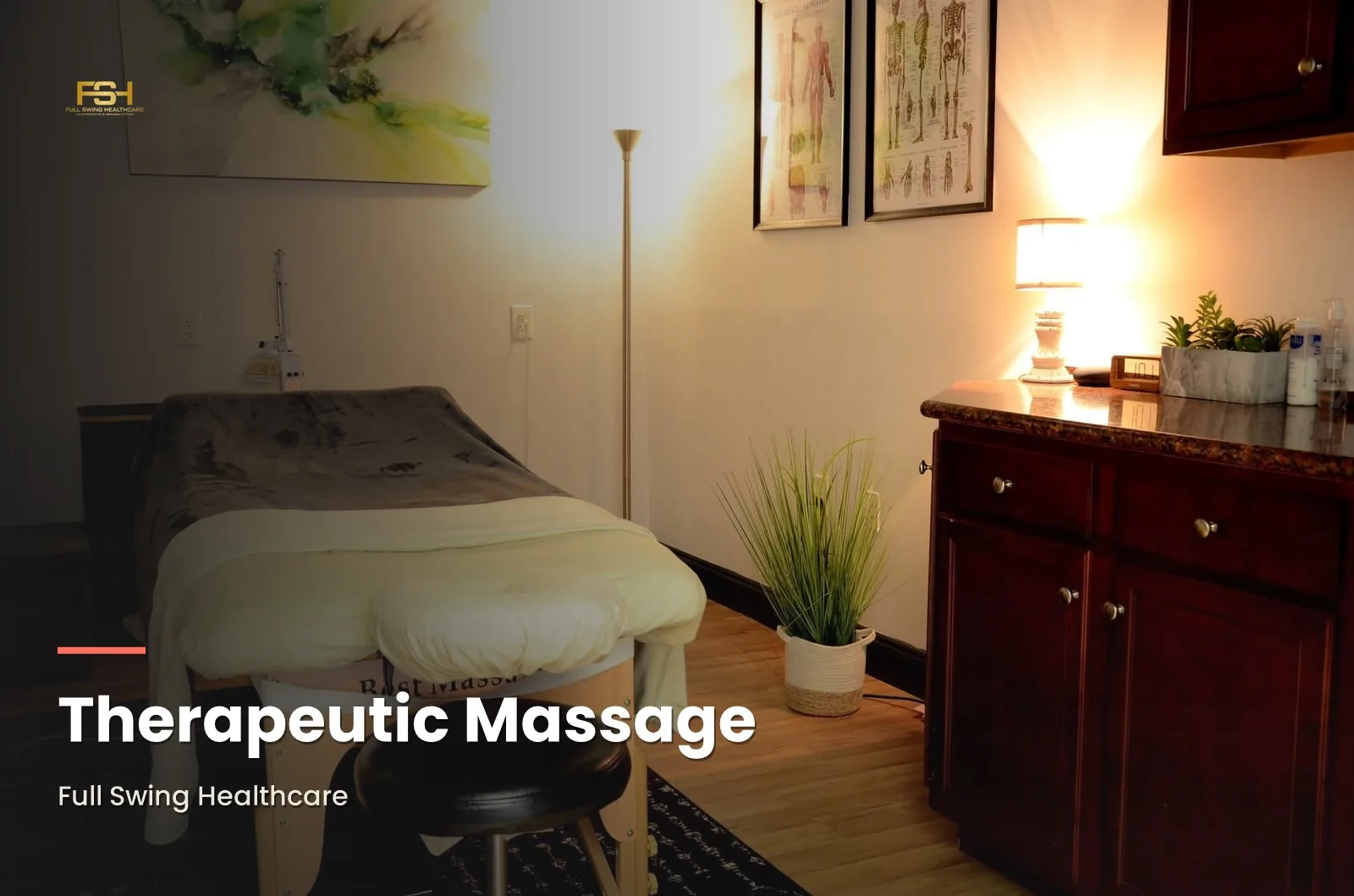
Therapeutic massage in Jacksonville isn’t a candles-and-cucumber spa hour. Therapeutic massage at Full Swing Healthcare is treatment with a purpose: it loosens the tight, guarded muscles around an injury so the rest of your care actually holds. When your soft tissue lets go, an adjustment lasts longer, you move easier, and you get back in full swing faster.
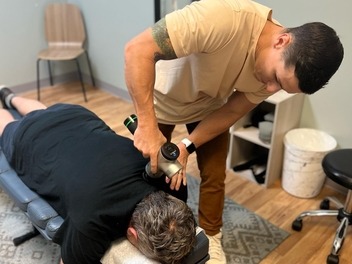
What therapeutic massage actually does
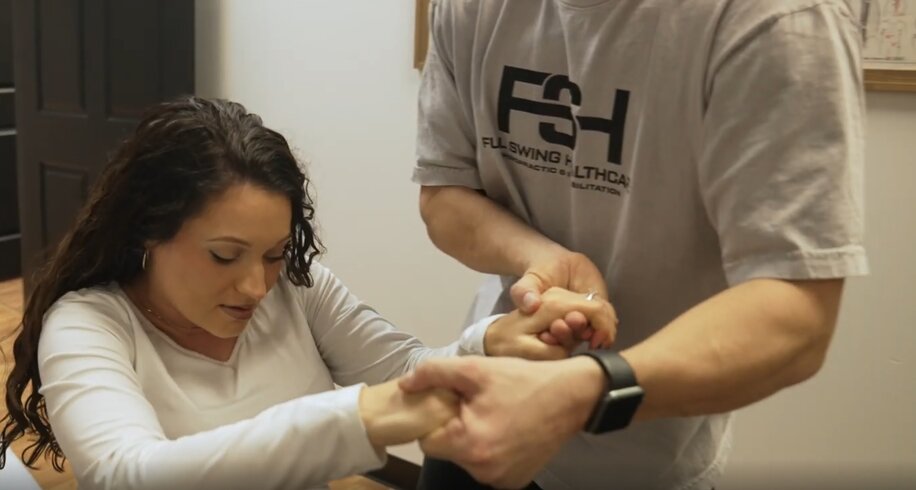
When you hurt, the muscles around the problem clamp down to protect it. That guarding feels protective in the moment, but it pulls your spine and joints out of alignment, chokes off circulation, and keeps you stuck in the pain. Therapeutic massage breaks that loop. Our therapists work directly on the muscles and fascia that are doing the over-gripping, releasing tension, flushing the area with fresh blood, and giving your joints room to sit where they should.
That’s why we so often pair it with chiropractic care. Loosen the soft tissue first, and the adjustment goes in cleaner and stays put. It’s the same assess-first idea we run on across the clinic: figure out what’s actually tight, then work that specifically, instead of a generic full-body rubdown.
“Cody has always been a pleasure to work with. Very trustworthy and knowledgeable. Highly recommended for adjustment or massage.”
DS David Snead
Jacksonville
Types of therapeutic massage we use
Massage isn’t one thing, and the technique should match what you walked in with. We usually warm up with lighter, flushing strokes first, because you can’t force a guarded muscle open. You settle the nervous system, then you go deeper. From there your therapist reaches for whichever of these fits the problem:
Deep-tissue massage
Deep tissue massage works the deeper layers of muscle and the connective tissue between them. It’s the right tool for chronic tension that has gone stiff and fibrous, the kind that builds after years of long shifts or a pain pattern you’ve been compensating around. Firm, cross-fiber pressure breaks up the adhesions that form between tissue layers and restores the glide that normal movement needs.
Trigger point therapy
A trigger point is a knot in a taut band of muscle that refers pain somewhere else. A locked-up upper trap can send an ache into your temple and behind the eye. A deep hip muscle can throw pain into the glute and low back that mimics a disc problem. Sustained, focused pressure on the knot releases the contraction, and that referred pain usually eases off or disappears.
Sports massage
This targets the specific muscles your sport actually loads. Before an event it wakes up circulation in the muscles you’re about to use. After, it clears out soreness and finds the tight spots that build with training volume, ideally before they turn into an injury. For Jacksonville athletes training year-round in real heat, it’s maintenance, not an afterthought.
Myofascial release
This is a slow, sustained stretch on the fascia, the connective wrap around your muscles, held long enough (roughly 90 to 120 seconds) for the tissue to genuinely let go. It responds to patient, low-load pressure in a way it never does to quick stretching. It’s often the most useful technique for diffuse, all-over tightness that doesn’t trace back to one clear knot.
Prenatal massage
Prenatal work is done side-lying with proper bolsters and full positional support, so there is never pressure on your belly. It focuses on the low back, hips, and glutes that carry the load of a shifting center of gravity through pregnancy, and it pairs naturally with prenatal chiropractic in the same visit.
What it helps
- Back pain from tight, overworked muscles and long days at a desk or behind the wheel
- Neck and shoulder pain and the knots that come with stress and screen time
- Tension headaches that start in a locked-up neck and base of the skull
- Tight hamstrings, hips and calves that pull your low back out of line
- Sore, overtrained muscles after a long surf session, a run on the beach, or a heavy lift
- Stubborn muscle tension that keeps undoing your adjustments between visits
Massage is part of a plan, not a one-off. Because we assess before we treat, your massage targets the tissue that’s actually driving your pain, and we combine it with the rest of your care so the relief sticks instead of fading by the time you reach the parking lot.
Why chiropractic and massage work better together
An adjustment restores motion to a stiff joint. But the muscles, ligaments, and fascia around that joint have adapted to its stuck position, and if they stay tight, they’ll tug it right back within a day or two. That’s why some people get adjusted for years, feel good for a day, and never quite turn the corner.
The fix is sequence. Your therapist releases the soft tissue first, calming the spasm and deactivating the trigger points that are actively pulling the joint out of line. Then the adjustment goes into tissue that’s ready to accept and hold the correction. The improvement stacks up instead of resetting every visit, and most patients get faster, longer-lasting relief than either approach delivers on its own.
For auto-injury and work-injury patients, the soft-tissue work matters on paper too. When your muscle findings are assessed, treated, and recorded alongside the chiropractic exam, the clinical record backs up your injury claim in a way an adjustment log alone doesn’t.
What to expect
We figure out what’s tight
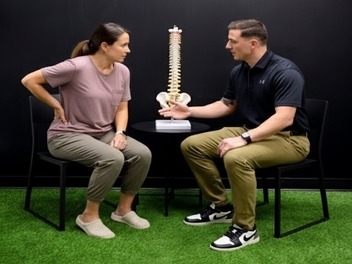
Your therapist works from your exam and what’s bothering you that day. We’re not guessing. We know which muscles are guarding and why.
We work the tissue with intent
Focused pressure on the muscles and fascia that need it. It can feel firm where you’re tight, but it should never be more than you can comfortably breathe through. Tell us, and we adjust.
We pair it with your care
Massage often sets up an adjustment, cupping or dry needling the same visit, so the whole session builds on itself.
You leave moving easier
Most people walk out looser and lighter. We’ll send you off with simple things to do at home to keep that tissue happy.
“Full Swing is the best place I could have been referred to. Jayson, one of the massage therapists, is an absolute Godsend, hands down.”
CM Cooley M.
Jacksonville
Pairs well with: chiropractic adjustments, myofascial cupping, and dry needling. Most patients get the best, longest-lasting results when massage is stacked with hands-on joint work. That whole-toolbox approach is the whole point of Full Swing.
$115 first visit, exam included
$60 25-minute massage
$85 50-minute massage

Who performs your massage
Your soft-tissue care is guided by Dr. Eric Hall, DC. He earned a B.S. in Kinesiology from Jacksonville University and his Doctor of Chiropractic from Palmer College, and he is a former football and baseball athlete himself. That means he reads athletic tissue, overuse, and compensation patterns from experience, not just a textbook.
Hands-on massage is delivered by licensed massage therapists (LMT) who hold Florida state licensure, with proper draping maintained throughout every session. We document each visit in SOAP-note format (subjective, objective, assessment, plan), so your care stays consistent from visit to visit and supports insurance billing when it applies. Working shoulder to shoulder with Dr. Cody Muren, DC, the team knows exactly what your adjustment is trying to accomplish, so the massage supports it instead of working against it.
Your Jacksonville massage therapy clinic
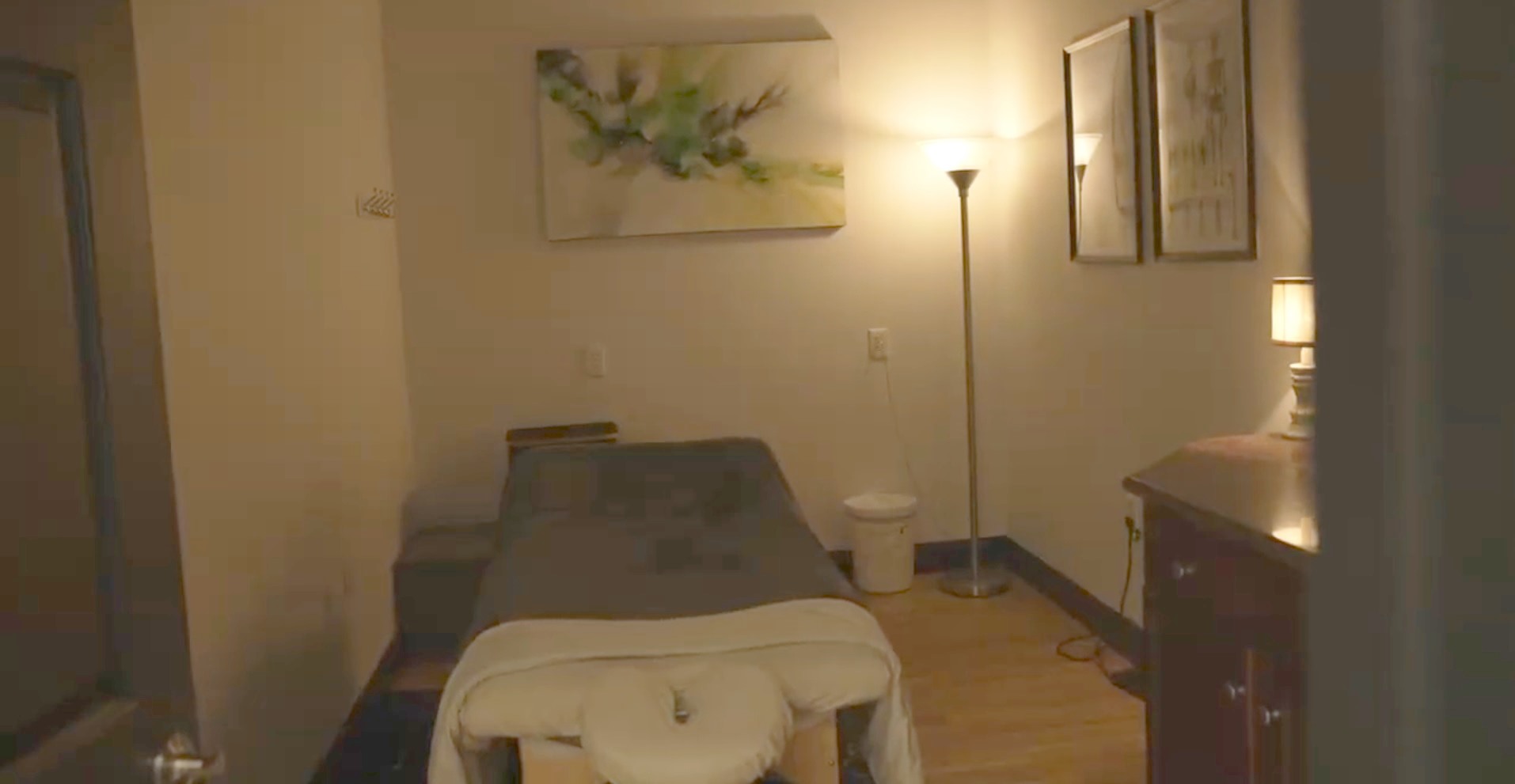
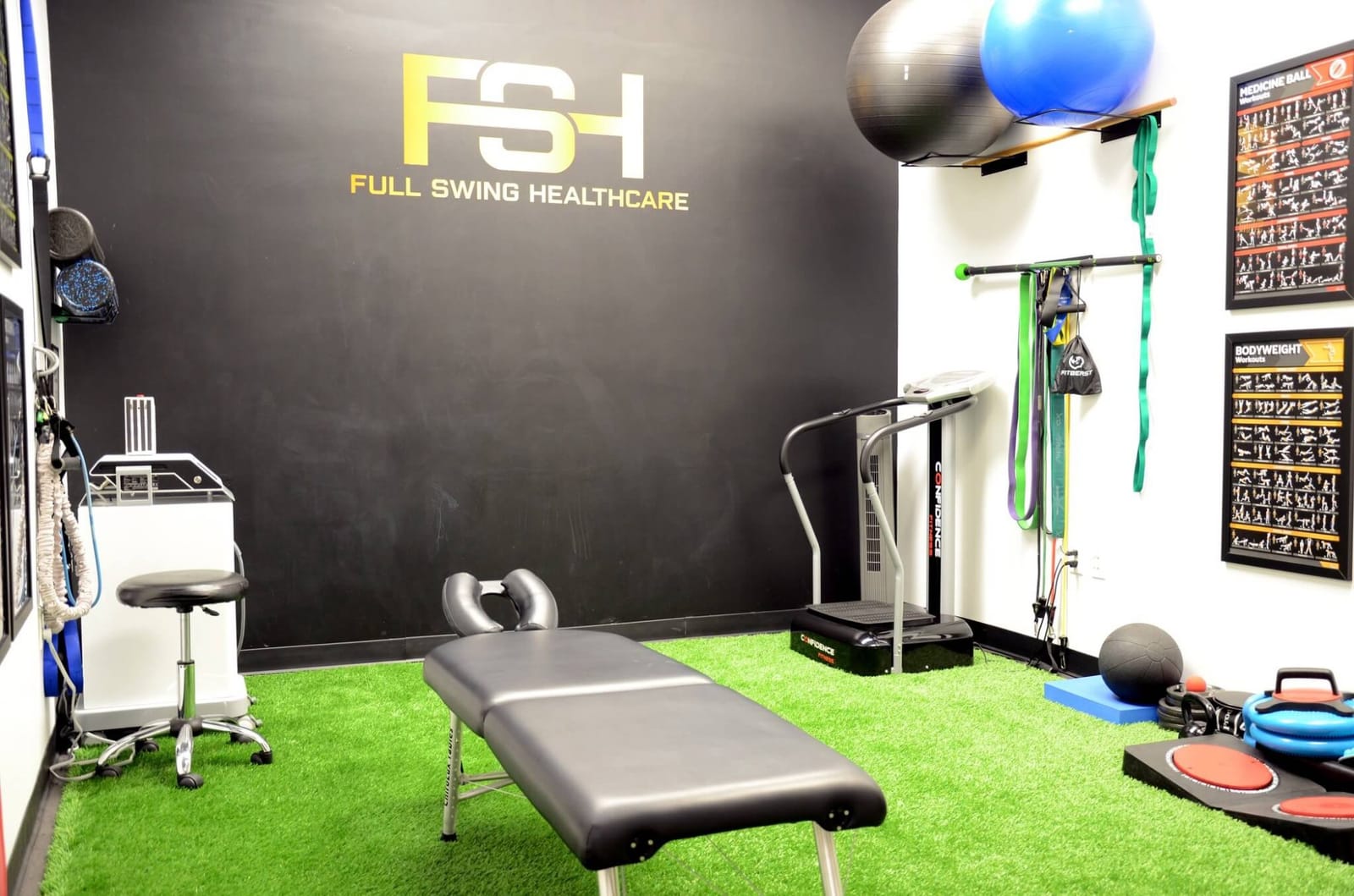
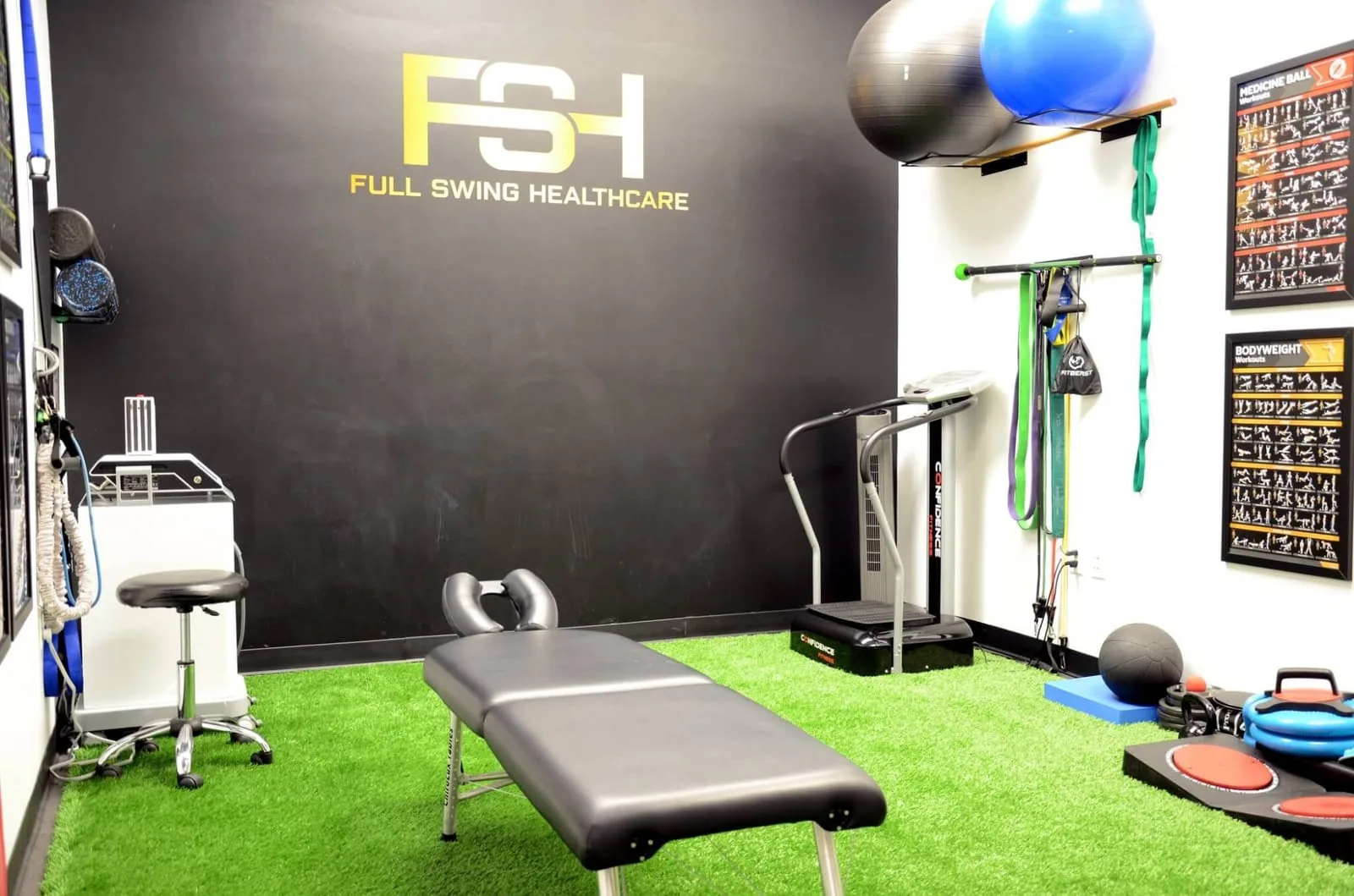
Full Swing Healthcare sits at 13770 Beach Blvd #4, minutes from Jacksonville Beach, Neptune Beach, Atlantic Beach, and Ponte Vedra Beach. We see the whole spread of local tissue: warehouse workers and nurses on their feet through 12-hour shifts, runners building mileage for the Gate River Run, golfers grinding range sessions, and surfers paying for a long session the next morning. Same-day appointments are often available, and because massage, chiropractic, and rehab all live under one roof, you handle a combined visit in a single trip instead of driving all over town. One visit, one team, one plan to get you moving again.
Pair it with

Massage therapy questions
Is this a relaxation spa massage?
No. This is therapeutic, treatment-focused massage aimed at the specific muscles and fascia driving your pain. It can feel deeply relaxing, but the goal is recovery: releasing tight tissue so your adjustments hold and you move better. Every technique choice is driven by your exam findings, and we track whether it’s working.
Should my massage come before or after the adjustment?
Almost always before. Releasing the surrounding muscle first makes the joint more accessible and the adjustment more comfortable and precise. For post-adjustment soreness in new patients, we’ll sometimes finish with lighter strokes.
Does therapeutic massage hurt?
It can feel firm in the spots that are genuinely tight, but it should never be more than you can comfortably breathe through. Tell your therapist what you’re feeling and we’ll adjust the pressure on the spot.
Can I book a massage-only visit?
Yes. Some patients come in just for soft-tissue work between chiropractic visits, particularly athletes in an active training block. Call (904) 539-3352 or book online and let us know what you’re looking for.
Does insurance cover massage therapy?
Sometimes. When massage is built into a chiropractic treatment plan and documented as medically necessary, some Florida Blue, Humana, Cigna, and United Healthcare plans will cover it. Coverage varies by plan, so we verify your benefits before your first visit.
How much does it cost?
Your first visit is $115 and includes a full exam so we know exactly what to work on. A 25-minute massage is $60 and a 50-minute massage is $85, and adding an adjustment to any treatment is $30. We accept all major cards and cash, plus Florida Blue, United Healthcare, Humana, Cigna, Florida Medicaid and VA benefits.
Chiropractic vs. massage therapy for neck pain in Jacksonville
Chiropractic and massage therapy target different layers of the same neck-pain problem, and they work far better together than either one alone. Chiropractic corrects restricted joint mechanics; massage releases the soft tissue that tightens in response. Choosing one over the other is usually the wrong question.
Which clinic in Jacksonville offers massage therapy for back pain?
We offer massage therapy for back pain right here in Jacksonville, and we almost always pair it with chiropractic care on the same visit. That combination consistently outperforms either approach on its own, because most back pain has both a muscular and a joint component that need to be addressed together. When a spinal joint is restricted or you have been holding a tough posture for months, the muscles around it tighten up to protect the area.